



Project
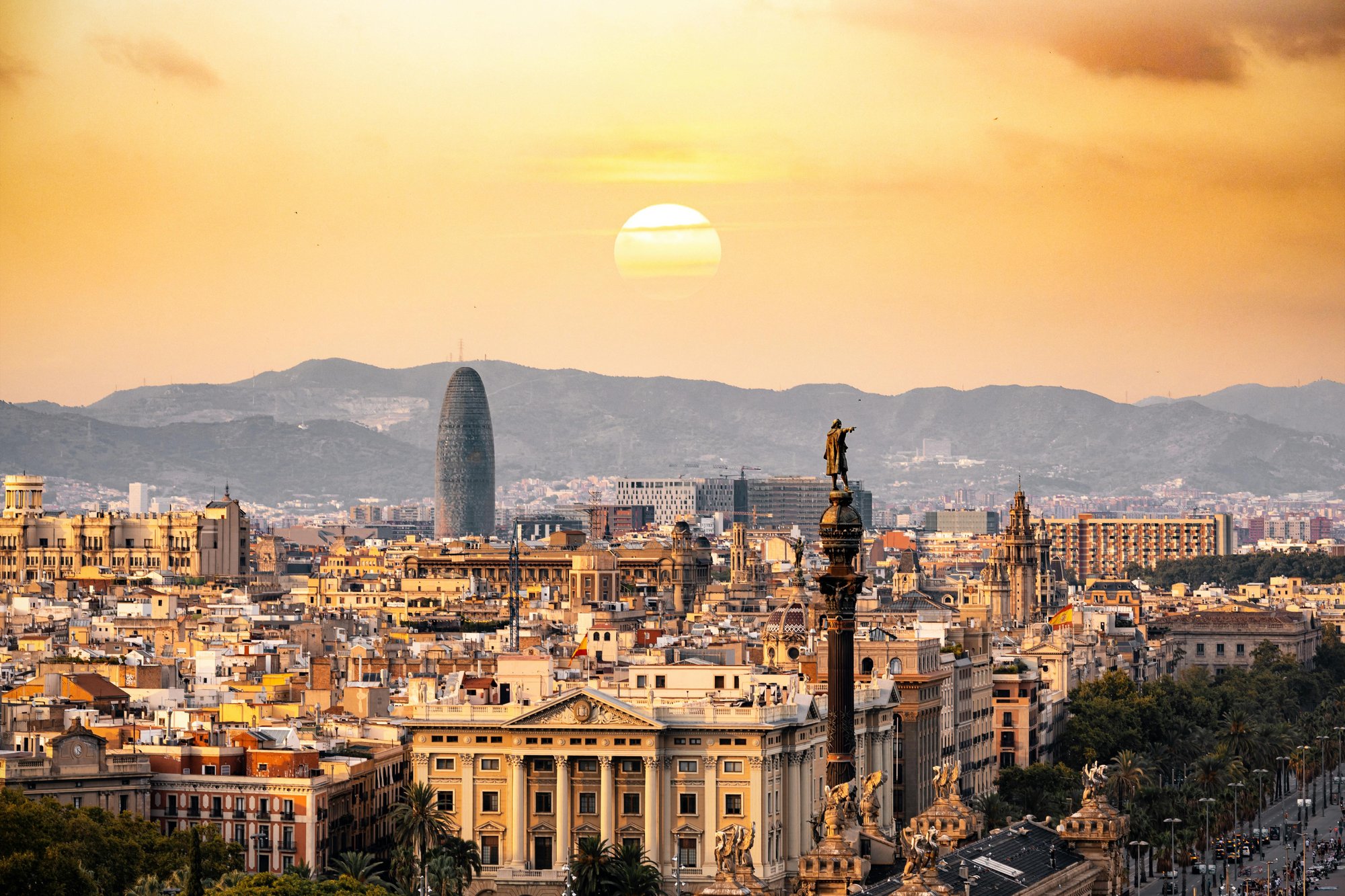
With Barcelona (specifically PARCS I JARDINS, a municipal institute of the City Council), which is already particularly focused on adopting solutions that promote biodiversity in the city, the Capellino Foundation has designed a project against extreme drought in urban areas. This project aims to use exotic plant species that are more resilient to extreme weather conditions.
Barcelona, already at the forefront of adopting urban biodiversity solutions, is therefore an ideal context for testing such a replicable and scientifically-based approach to addressing the current climate crisis. The future of our cities depends on thoughtful decisions that take into account a changing climate.
The project, which began in 2025 and will last four years, will involve five urban areas with varying degrees of environmental pressure. Resilient tree species, such as Zelkova serrata and Pistacia chinensis, will be tested to identify solutions best suited to adverse climatic conditions.
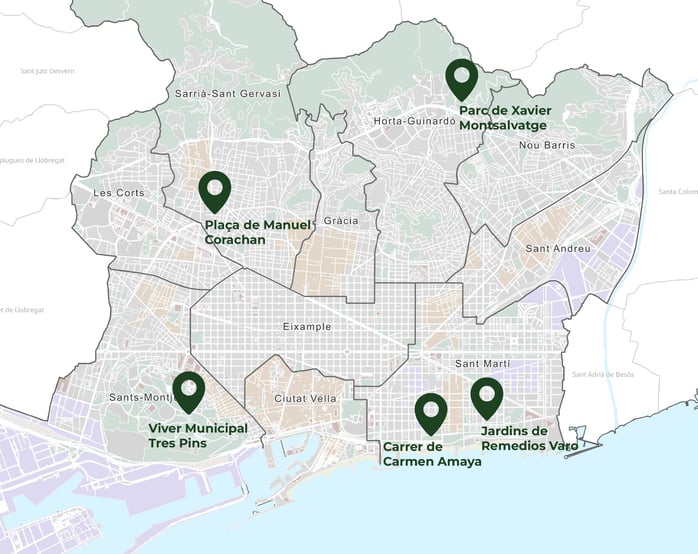
The planting sites were carefully chosen to represent different environmental conditions across Barcelona, including coastal areas, more inland locations and a nursery used as a reference site. This makes it possible to see how the different species perform in a range of environments and to understand whether any differences are due to the species themselves or to the surrounding urban conditions.
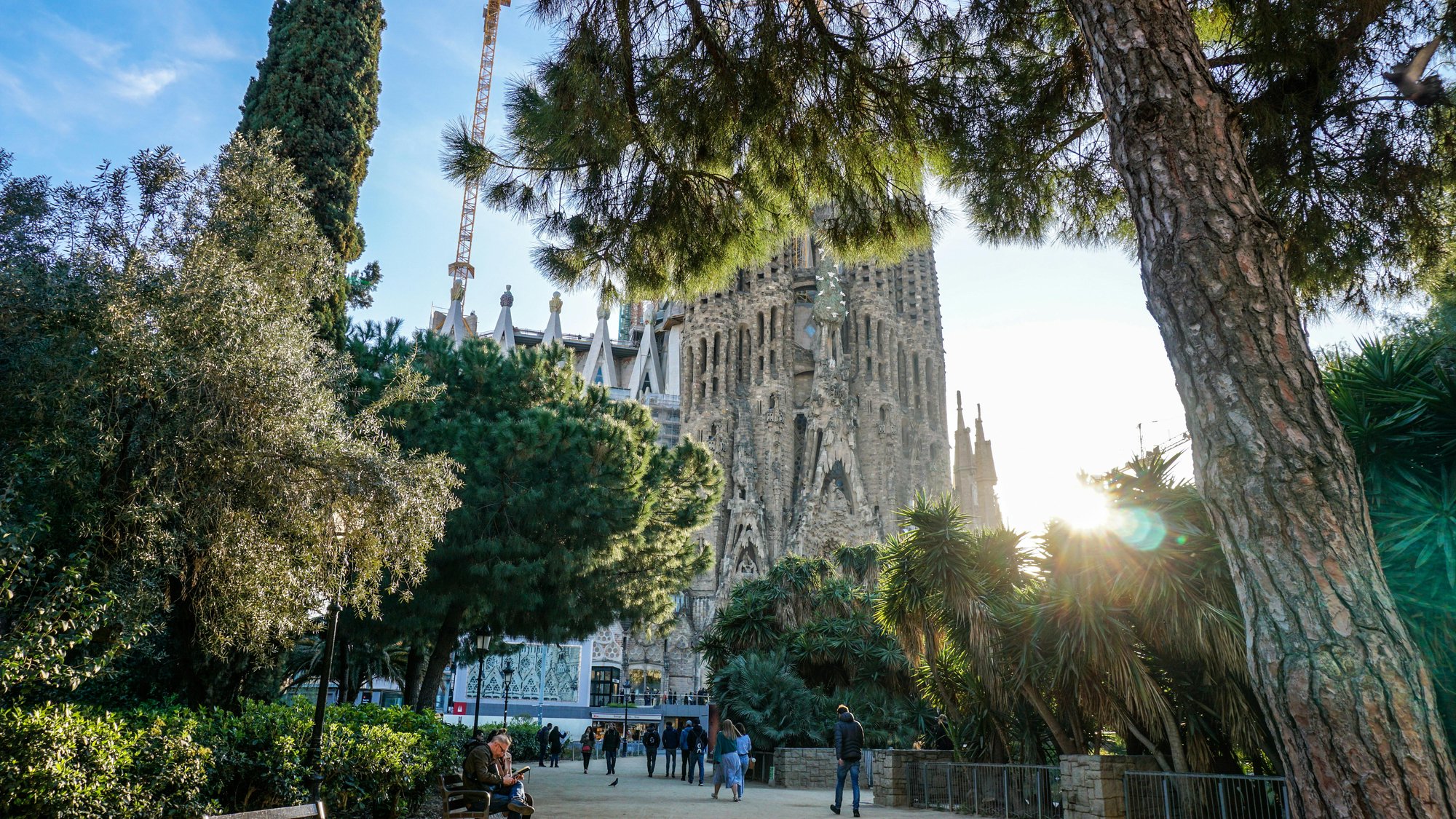
The projects takes place in several public urban spaces — Parc de Xavier Montsalvatge, Plaça Manuel Corachán, Jardins Zamora - Ramon Turró and Plaça Carmen Amaya. These locations allow the trees to be observed in real city conditions. Viver Tres Pins is used as a non urban reference site, making it possible to compare results and better understand the effects of urban stress on the trees.
The projects takes place in several public urban spaces — Parc de Xavier Montsalvatge, Plaça Manuel Corachán, Jardins Zamora - Ramon Turró and Plaça Carmen Amaya. These locations allow the trees to be observed in real city conditions. Viver Tres Pins is used as a non urban reference site, making it possible to compare results and better understand the effects of urban stress on the trees.
With the support of the Parcs i Jardins municipal entity and the collaboration of research institutes such as CREAF (Catalan) and CNR (Italian), the use of these species in different areas will therefore be tested, ensuring scientific validity to the conclusions. Various parameters including irrigation, soil quality, plant health and urban microclimate will be monitored. The goal is to develop a scientific database to guide planting choices in the city, promote a more resilient urban environment and improve the quality of life for citizens. The project is inspired by a multivariable approach, similar to that already adopted in Florence.
Barcelona, already at the forefront of adopting urban biodiversity solutions, is therefore an ideal context for testing such a replicable and scientifically-based approach to addressing the current climate crisis. The future of our cities depends on thoughtful decisions that take into account a changing climate.
Duration: 4 years, starting in 2025.
Locations: 5 different locations with different gradient
Soil: Use of two different soil types.
Trees: Evaluation of 10 trees for each of the 5 locations, for a total of 50 units.
Species used: Zelkova serrata and Pistacia chinensis.
Measurements: Data collected at least twice a year through a variety of instrumentation.
Monitoring:
-
Frequency and amount of irrigation.
-
Geomorphological characterization of sites.
-
Spectral library.
-
Microclimate and air quality.
-
Tree health status.
-
Measurement of plant parameters.
Objectives:
- Learn about the evolution of trees and their interaction with the environment.
- To identify the most adaptable and resilient species and soil substrates for Barcelona's urban environment.
- To study the impact of trees on urban climatic and environmental regulation, therefore solutions that improve urban well-being.
Partners
Ajuntament de Barcelona / Parcs i Jardins is the municipal public agency responsible for the management, conservation and enhancement of the city's urban green spaces, with the goal of making Barcelona more livable, sustainable and resilient through the care of parks, gardens and street trees.
CREAF is a public research center dedicated to terrestrial ecology and spatial analysis, producing knowledge and methodologies for the conservation, management and adaptation of the environment to global changes.


Project data
 |
DURATION 2025-2028 |
 |
OUR INVESTMENT € 209.161,00 |
