

RVF Experimental
Agricultural Society
DIRECTLY CONDUCTED PROJECT
Biodiverse Agriculture
The intensive agricultural model, which treats the field as a blank slate upon which to apply fertilizers and pesticides for agro-industry purposes, has progressively reduced soil fertility, increased water and air pollution, and led to the extinction of biodiversity in the areas where it has been practiced.
To remedy this, it is essential that agriculture regain its role in producing healthy, high-quality food while respecting the greatest possible biodiversity.
There are no ready-made formulas. One area of research is the practice we call biodiverse agriculture, a variant of regenerative agriculture that focuses on integrating biodiversity into the agricultural system to the maximum possible extent.
This agricultural practice combines production with the creation of biosystems, which primarily serve to restore soil fertility and vitality, reduce water and air pollution, and restore natural balance in a sector that has become overburdened.
Through experiments, which, while not profitable, are essential to finding effective solutions, Biodiverse Agriculture aims to make a concrete contribution to solving the problem.
In recent months, we have witnessed a proliferation of conferences on regenerative agriculture, promoted by figures of all kinds, often with the aim of making change seem inevitable while everything remains unchanged.
project
Our project will consider agroforestry and viticulture, exploring the maximum biodiversity these practices can offer. At the same time, we have initiated field trials, particularly on soil fertility and vitality, with the aim of defining scientifically validated action protocols.
project details
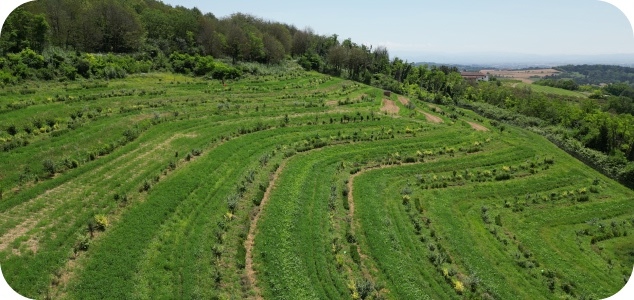
- Optimized management of surface and groundwater, using K-lines to prevent erosion and create soil retention and infiltration;
- Reduction of drinking water consumption from the aqueduct for drinking purposes only. Permanent cover of agricultural soil and planting of 10,000 new trees and shrubs.
Active conservation measures will be implemented for wildlife and habitat restoration, including:
-
Creation of ecological corridors and bird perches;
-
Construction of a biodiverse pond within the 12 hectares reserved for wildlife, serving as a water resource for wildlife and a microhabitat for amphibians and pollinating insects;
-
Limiting human interference, establishing a hunting ban on the entire property, and prohibiting human access to 12 of the 22 hectares.
DURATION
Indefinitely since 2019
OUR INVESTMENT
€ 1.090.000,00 to 2024, then €300,000/year