


Villa Fortuna
Società Agricola
Sperimentale Biodiversa
DIRECTLY CONDUCTED PROJECT
Biodiverse Agriculture
Villa Fortuna Società Agricola Biodiversa Sperimentale. A farm where production, biodiversity and research grow together.
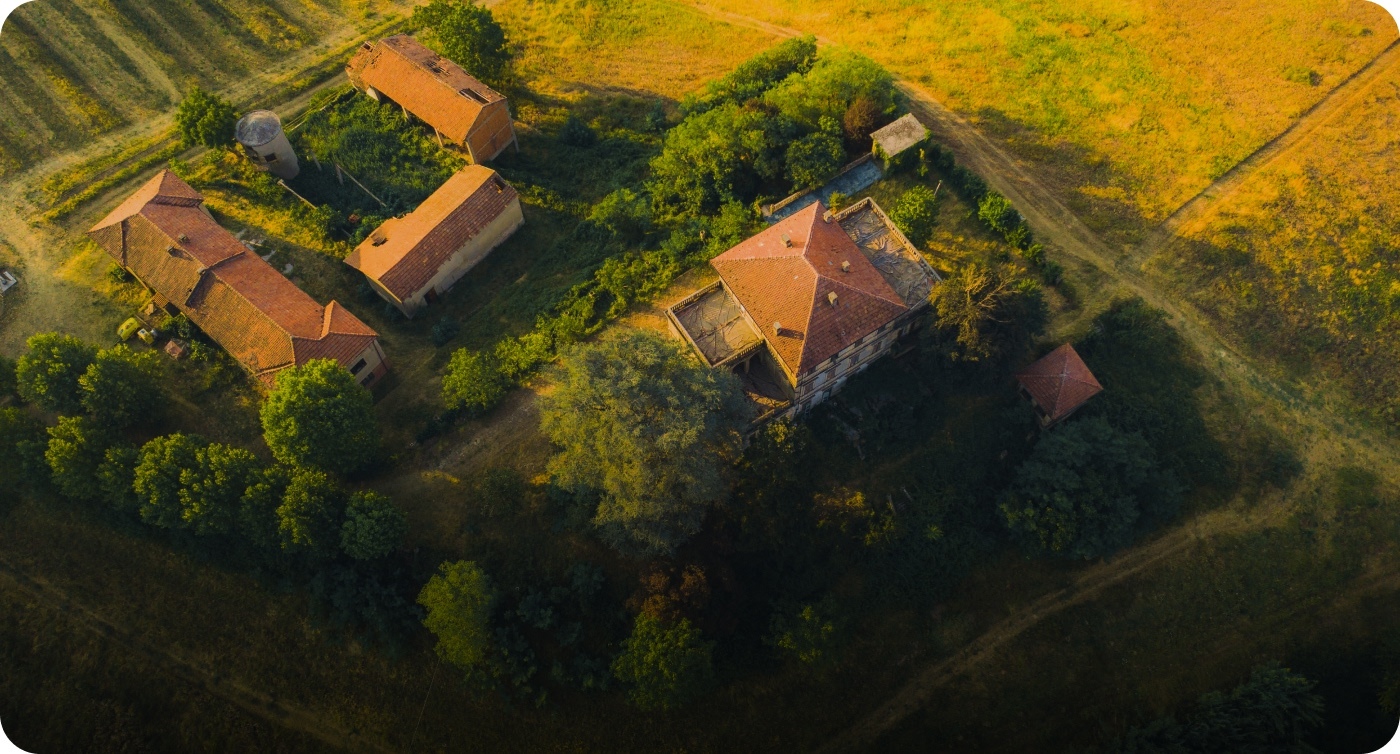
Surrounding Fondazione Capellino's headquarters in San Salvatore Monferrato, Italy, are 20 hectares of land where vineyards, agroforestry systems, crops, woodland, hedgerows, tree belts, field margins and areas dedicated to biodiversity coexist.
Villa Fortuna was established to explore a fundamental question: Is it possible to produce food while maintaining and enhancing the biodiversity and natural resources on which agriculture itself depends?
The aim is to explore this question not through isolated experimental plots, but by studying the farm as a single, interconnected living system. Soil, water, cultivated and wild plants, woodland, wildlife, insects, microorganisms and human activities are all part of it and are observed in relation to one another.
Biodiversity is not simply something to preserve alongside agricultural production; respecting it is a fundamental obligation that guides how production is carried out. This vision underpins the Reintegration Economy model promoted by the Fondazione Capellino.
Villa Fortuna's articles of association formalize this commitment: to develop productive agricultural models that conserve and enhance biodiversity, improve soil biological fertility, protect water and air quality, preserve habitats, and strengthen ecological connectivity.
An experimental agricultural landscape
Villa Fortuna is a productive farm, but also an open-air laboratory. Each area serves a distinct agricultural and ecological function and is designed and managed with the surrounding landscape in mind.
Approximately half of the farm consists of woodland, managed through limited interventions to preserve its role as a refuge, habitat and movement corridor for wildlife. An approximately 3.5-hectare agroforestry area combines trees, shrubs and herbaceous plants to explore food and biomass production, soil improvement and habitat creation. The area was designed in collaboration with the University of Milan, whose researchers subsequently published a scientific article on the project.
The vineyards represent one of the farm's main agricultural laboratories. The vineyards feature Slarina, Baratuciat and Freisa, grape varieties associated with Piedmont, alongside Viognier and Soreli. Soreli, a disease-resistant PIWI variety, has also been incorporated into the agroforestry system to explore the integration of viticulture and agroforestry. The different plots are used to compare pruning methods, agronomic management practices and microvinifications.
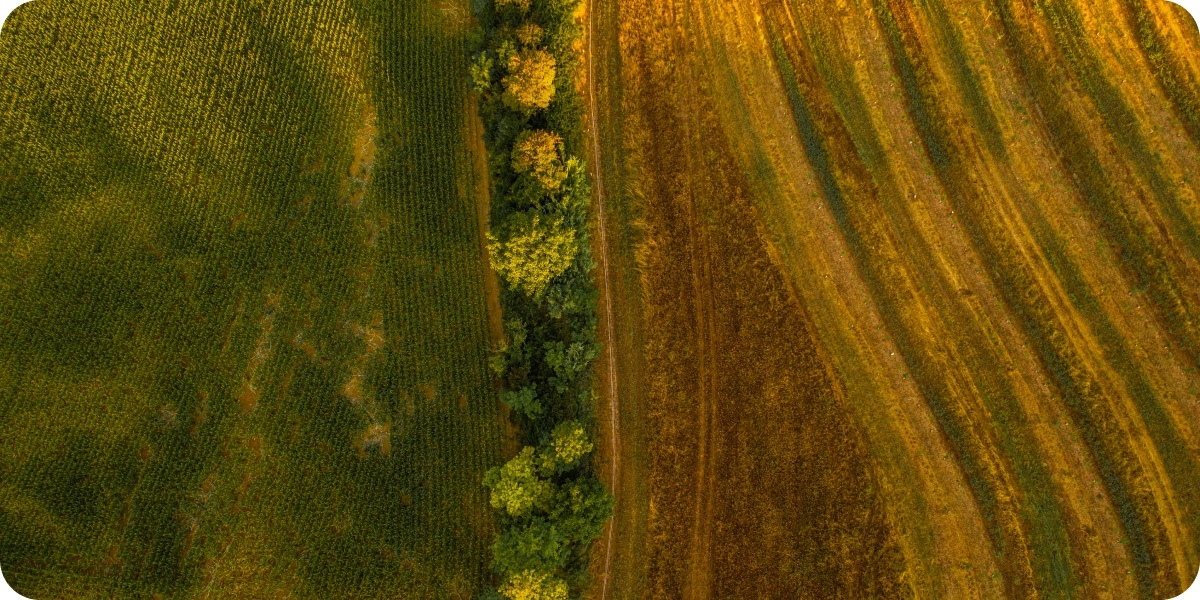
Hedgerows, rows of trees and tree belts serve as ecological infrastructure, connecting woodlands and cultivated areas, providing food and shelter for wildlife, supporting pollinators, protecting the soil, moderating local microclimates and improving ecological connectivity across the agricultural landscape.
Water is also part of this design. Potential wetland areas are being studied to identify solutions that can provide habitats for amphibians, insects, birds and other species while improving water management and increasing the farm's ecological diversity.
Cultivating, observing, measuring
Experimentation is part of everyday agricultural work. Before taking action, we seek to observe. After taking action, we seek to measure what has happened.
We collect data on crops, soil and biodiversity; compare different agricultural management strategies; observe how plants respond; and continually adapt our practices based on the results. In this sense, Villa Fortuna cultivates not only crops, but also new methods.
Particular attention is paid to soil health and fertility. Agricultural practices are assessed for their effects on soil structure, water, root systems and microbial life. Plant biomass, grass clippings and pruning residues are treated as valuable resources that can be returned to the soil through composting and mulching.
Crop protection is also a subject of research. Alongside products permitted in organic farming, we experiment with plant extracts, botanical macerates, essential oils and other crop protection strategies. Our aim is to progressively reduce dependence on external inputs while understanding how these treatments affect not only plant diseases, but also the broader biological system of the plant.
BRINGING RESEARCH INTO THE FIELD
A defining feature of Villa Fortuna is its close integration of farming and scientific research.
Villa Fortuna has launched a multi-year research programme with CREA's Research Centre for Viticulture and Enology to study the characteristics of the farm's grapes and wines. The research covers Slarina, Freisa and Soreli, as well as Baratuciat and Viognier within the broader programme. It examines aromatic compounds, polyphenolic content, chemical composition and sensory profiles. A separate initiative is also planned to isolate native yeasts from the farm's grapes and evaluate their potential as fermentation starters.
In collaboration with AGROINNOVA at the University of Turin, Villa Fortuna is conducting research on protecting grapevines from downy mildew (Plasmopara viticola). The study compares treatments based on essential oils and plant macerates with other disease management strategies. The research includes field assessments of plant diseases and analyses of the leaf microbiome to investigate how different treatments may affect the bacterial and fungal communities living on grapevines.
These collaborations reflect Villa Fortuna's approach: bringing scientific questions into a working farm, where research and agricultural production can continuously inform and challenge one another.
Protecting biodiversity: towards the Villa Fortuna Oasis
Wildlife protection is an integral part of the project. Villa Fortuna is working to obtain formal recognition of its land as a wildlife oasis, protected area, refuge or another suitable legal designation, while also pursuing an effective ban on hunting throughout the property. This is not merely a management decision: the objective has been incorporated directly into the company's articles of association.
The proposed oasis would formally recognize a principle that already guides the farm's management: agricultural production must also accommodate the needs of wildlife.
Woodlands, hedgerows, rows of trees, meadows, wetlands and cultivated areas can contribute to a connected network of habitats. Looking beyond the farm's boundaries, Villa Fortuna could eventually serve as a starting point for efforts to strengthen ecological connectivity between the hills of San Salvatore Monferrato, Valenza, the Po River and surrounding agricultural plains. This vision is currently the subject of a project proposal by Fondazione Capellino and represents a potential direction for future development, rather than an established ecological corridor.
From the land to the products
Research and biodiversity protection do not replace the farm's productive function; rather, they seek to give it a broader purpose.
Villa Fortuna is gradually developing its agricultural production and beginning to explore food processing. Vegetables, fruit, grapes, herbs and other agroforestry crops are being used to develop small-batch products through seasonal trials, allowing production to reflect the farm's unique characteristics and natural growing cycles.
The products themselves become part of the experiment: they tell the story not only of what we harvest, but also of the landscape and agricultural system that made that harvest possible.
Our objective
Villa Fortuna does not aim to offer a universal solution or create an idealized model of agriculture. Instead, it aims to serve as a real-world experiment where we can try new approaches, observe, measure results, make mistakes, correct them and share what we learn.
Villa Fortuna aims to demonstrate that biodiversity conservation, soil fertility, food production, scientific research and economic sustainability can coexist within a single agricultural system. Rather than treating environmental protection, agricultural productivity and financial viability as separate goals, the farm seeks to integrate them into a sustainable operating model. The farm aims to achieve financial break-even by 2029.
DURATION
Indefinitely since 2019
OUR INVESTMENT
€ 1.090.000,00 to 2024, then €300,000/year