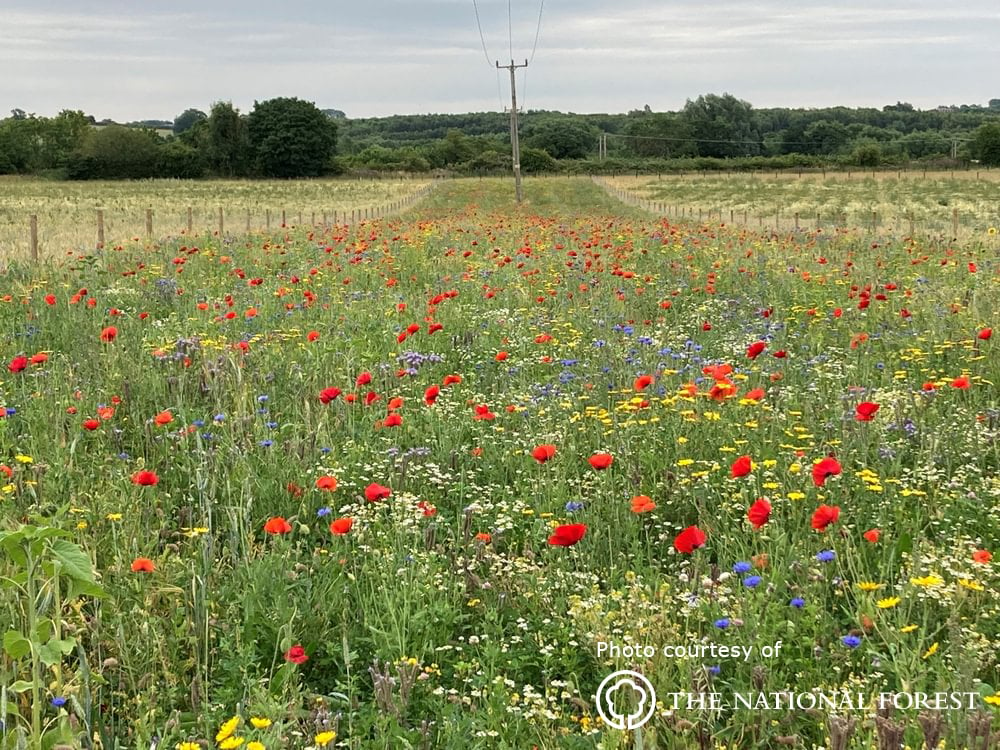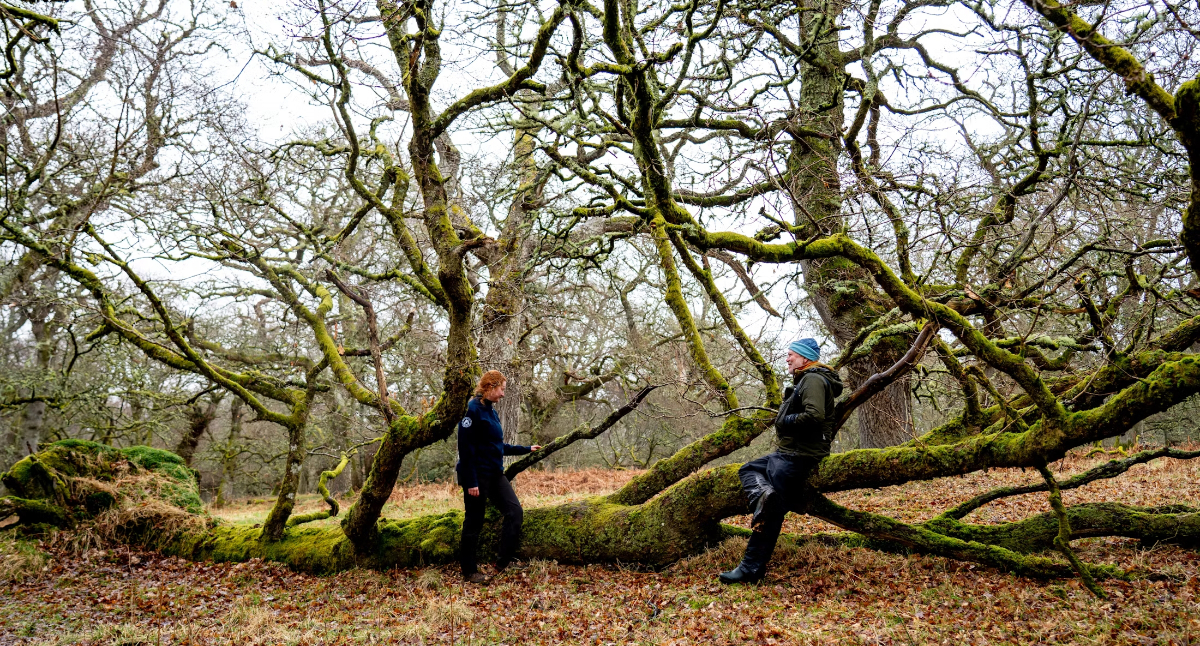

Restoring the Old Wood of Drum: creating a connected landscape for nature
From our dogs and cats to wildlife, nature and the world around us, we believe there is always more to learn about the planet we share and the challenges it faces. Because of this, we invite organisations whose work aligns with our values to share their knowledge, experience and ideas with our community. We hope their insights inspire you to learn something new, try something different, share an idea or find a way to get involved. In this post, we hear from Andy Stephenson from National Trust for Scotland, who shares details about the restoration of the ancient woodland of Drum.
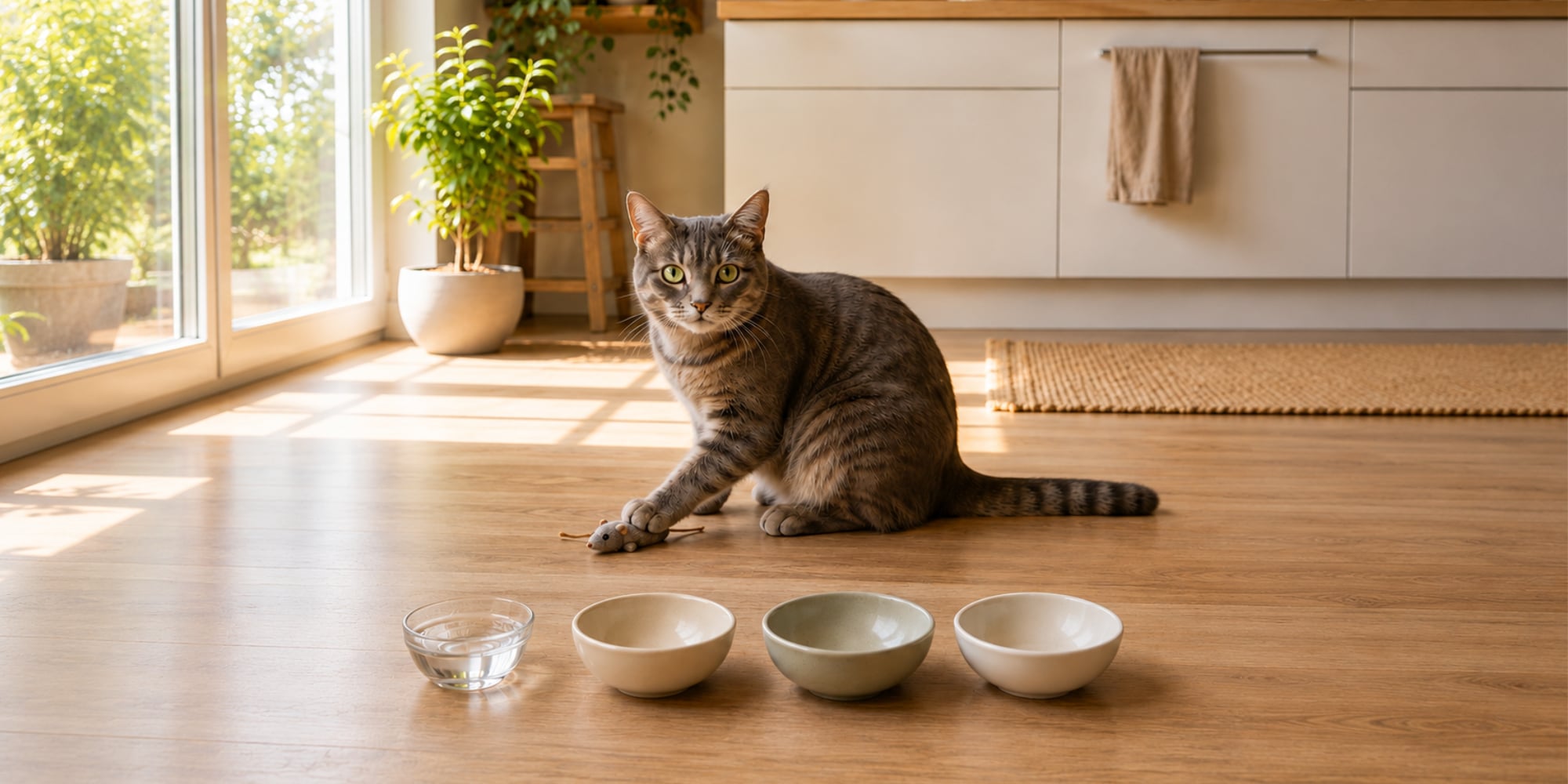
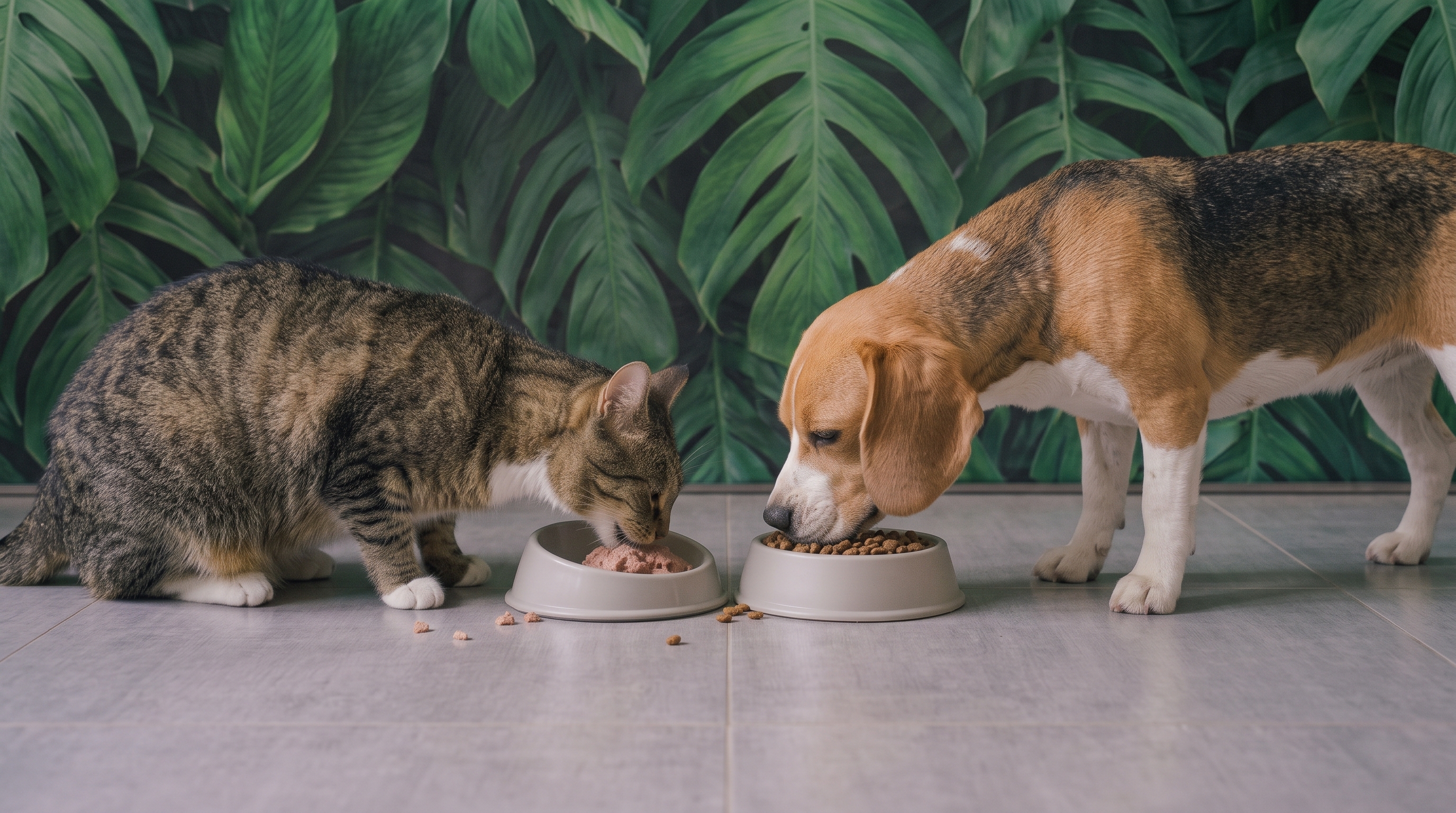
What do we actually put in our cats’ and dogs’ bowls?
A true pioneer, in 2000, Almo Nature, driven by the vision of its founder, Pier Giovanni Capellino, became the first company in the world to take a radically different approach to conventional pet food. It launched HFC quality pet food for cats and for dogs made with ingredients from the Human Food Chain. These recipes contain no meat or fish by products. Instead, they use the same quality of meat and fish intended for human consumption.
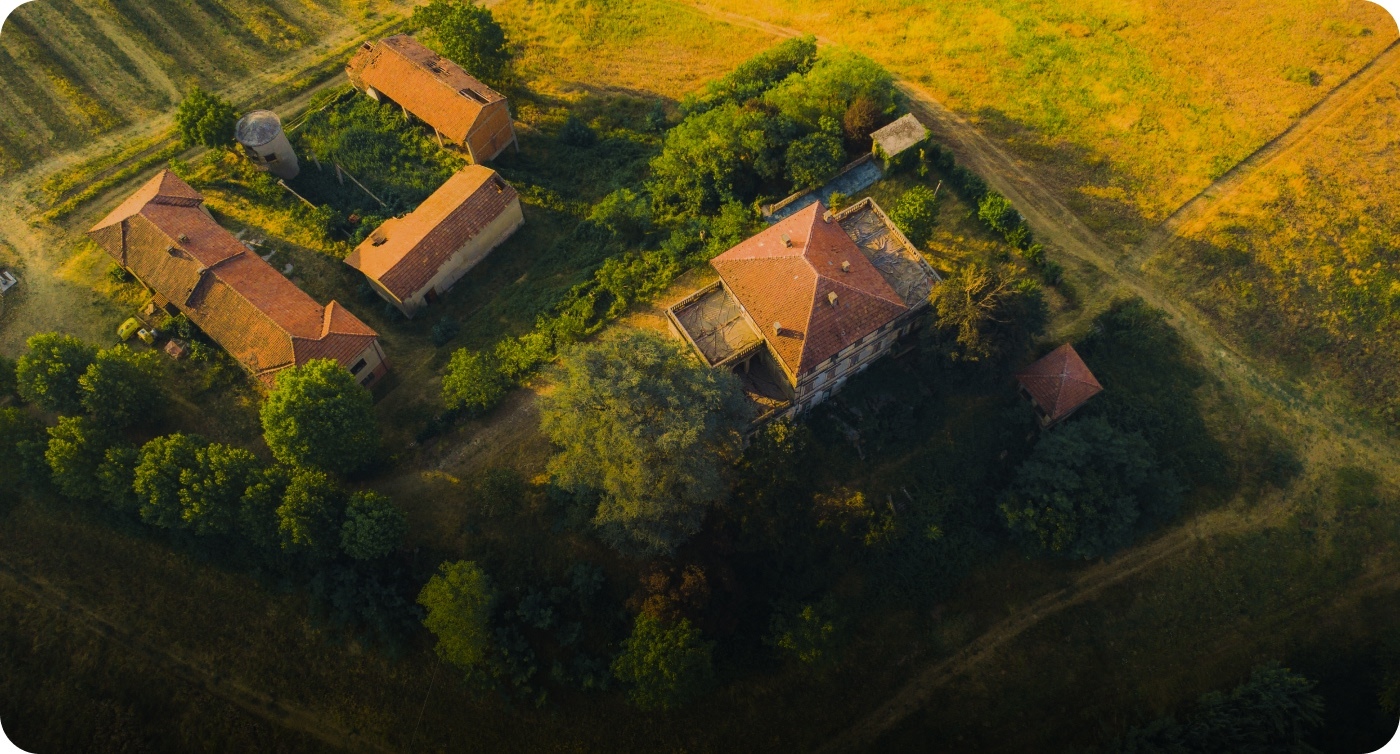
Biodiversity as a shared resource: rethinking land management to restore society
When we think of a woodland, a pasture or a mountain, we are used to asking who owns it: a private individual or a public body. But there is another way of owning and managing land, one that is much older and is still practised in various parts of Italy.
REcommunity
A space to inform, share and engage
The REcommunity is universally open to everyone, while also being the community of its founders, Almo Nature and Fondazione Capellino. It is based on the insight that life is an indivisible whole and that human activities, when carried out without limits as today, have a negative impact on it. Hence the importance of placing life, that is biodiversity, at the center of human decision-making and starting, within the economy, the progressive return of profits generated from biodiversity extraction and destruction back to biodiversity itself (an economy that reintegrates what it extracts), as happens every day at Almo Nature, which is 100% owned by Fondazione Capellino.
This is the Reintegration Economy, and the REcommunity is home to all those who share its values.

The REcommunity is open to everyone, yet it is also the community of its founders, Almo Nature and the Capellino Foundation.
It is based on the belief that life is a single, indivisible whole, and that human activities, when carried out without restraint – as is the case today – have a negative impact on it.

Articles
See all
Restoring the Old Wood of Drum: creating a connected landscape for nature
From our dogs and cats to wildlife, nature and the world around us, we believe there is always more to learn about the planet we share and the challenges it faces. Because of this, we invite organisations whose work aligns with our values to share their knowledge, experience and ideas with our community. We hope their insights inspire you to learn something new, try something different, share an idea or find a way to get involved. In this post, we hear from Andy Stephenson from National Trust for Scotland, who shares details about the restoration of the ancient woodland of Drum.
What do we actually put in our cats’ and dogs’ bowls?
A true pioneer, in 2000, Almo Nature, driven by the vision of its founder, Pier Giovanni Capellino, became the first company in the world to take a radically different approach to conventional pet food. It launched HFC quality pet food for cats and for dogs made with ingredients from the Human Food Chain. These recipes contain no meat or fish by products. Instead, they use the same quality of meat and fish intended for human consumption.
Biodiversity as a shared resource: rethinking land management to restore society
When we think of a woodland, a pasture or a mountain, we are used to asking who owns it: a private individual or a public body. But there is another way of owning and managing land, one that is much older and is still practised in various parts of Italy.
The Great Danube Drought: Restoring Nature Means Building a New Balance
The severe drought that hit the Danube basin in summer 2026 did not end with August. At the end of the month, along the border between Romania and Bulgaria, river discharge had fallen to around 1,600 cubic meters per second, compared with a long-term August average of around 3,900. In the first days of September, several gauges along the Danube continued to record water levels below the reference low-flow thresholds. But the level of the great river is only the most visible part of the problem. When water decreases, conditions also change in the wetlands, peatlands, meadows and small watercourses that make up the basin’s ecological system. Habitats designed or restored only a few years ago may no longer be able to perform the function they were intended to serve.
A million signatures can help change Europe
There is a little known tool that allows EU citizens to bring an issue directly to the attention of the European Commission and requires it to respond. It is known as the European Citizens’ Initiative (ECI) and, since 2012, it has been the first form of transnational direct democracy of its kind in the world.
Is dog and cat food tested on animals?
When you buy food for your dog or cat, you probably wonder what’s in it, where the ingredients come from and whether it meets their nutritional needs. But have you ever wondered how brands know whether their food appeals to pets or is easy to digest? You may not be aware of this, but certain dog and cat foods can be tested on animals to assess how well they are tolerated. Legally speaking, regulations do not require this type of testing as a standard practice. However, depending on what is being investigated and the type of product involved, dogs and cats may be included in studies designed to assess certain characteristics of a food, such as how appealing it is to them or how easily they can digest it. Behind these studies lies a reality that is perhaps even less well known. The animals used in research facilities do not come from family homes. They are either born in these facilities or brought there at a very young age. Ce sont donc des animaux qui ne connaissent pas l’environnement familial traditionnel, et qui vivent dans des structures dédiées, avec des protocoles précis et des régimes alimentaires stricts. At Almo Nature, we have chosen a different approach. We do not carry out animal testing.
A special day to renew the bond between people and dogs
Today is International Dog Day, but your lifelong companion has no idea. And, if we're honest, they couldn't care less. It's a funny thought. In a world where so much is measured by what we own, the greatest gift a dog asks of us, today and every day, is simply our time, our full attention, and our presence, undistracted by a screen.
Why does your dog follow you everywhere?
You just go to fetch a glass of water, and your dog gets up straight away to follow you. 😀 In the kitchen, in the living room, sometimes even as far as the bathroom or the loo, your four-legged friend always seems to want to keep an eye on you. But why does he do that? In fact, this behaviour stems from a very deep-rooted instinct. Dogs are social animals that naturally need to stay close to their pack. Originally, their ancestors lived in packs. Staying close to one another was essential for feeling safe, communicating and sharing the important moments of the day. Today, even though your dog lives comfortably in your home, this instinct is still very much present. To him, you are his family, his pack. So, is this proof that he loves you?