

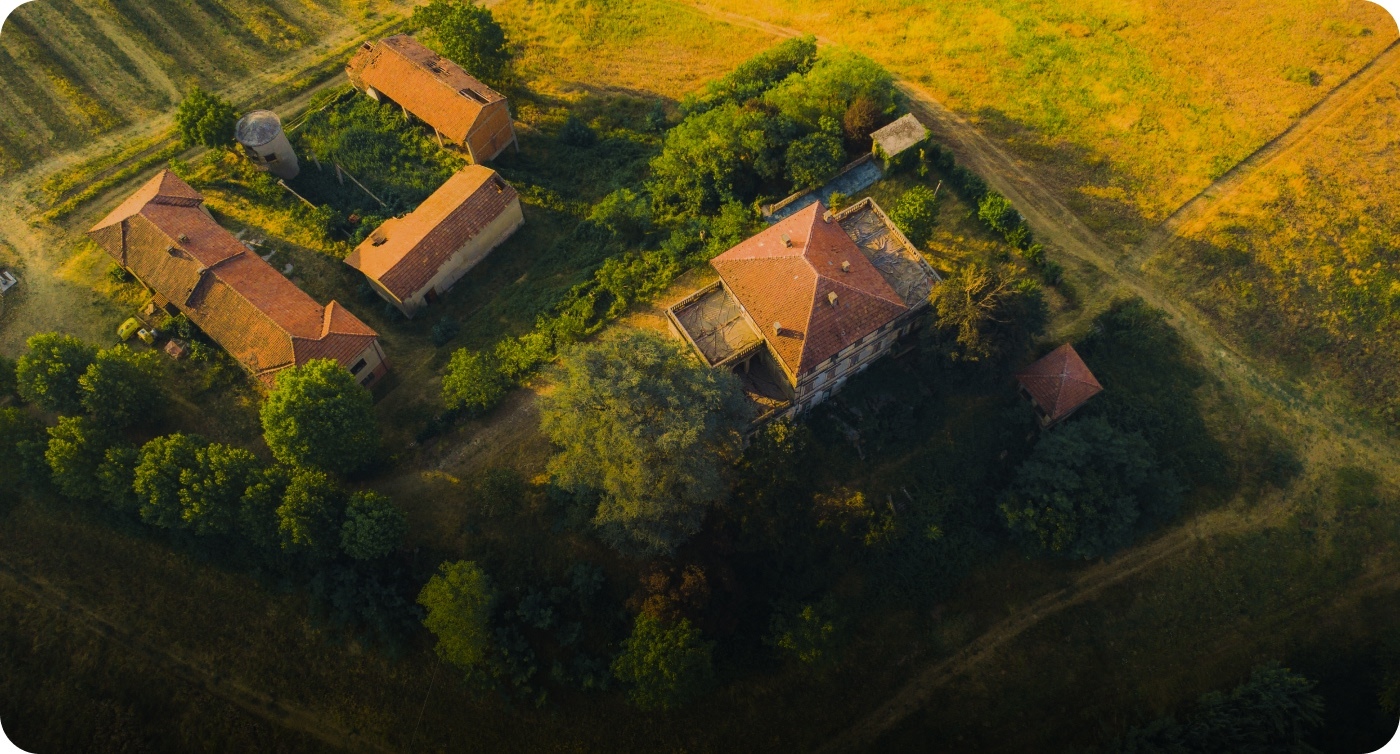
Villa Fortuna Società Agricola Biodiversa Sperimentale S.r.l. is an experimental farm, 100% owned by Fondazione Capellino, located in San Salvatore Monferrato (AL), Piedmont, Italy.
Across around 20 hectares, vineyards, agroforestry systems and arable crops coexist with woodland, meadows, hedgerows, ecological corridors and habitats for wildlife.
At Villa Fortuna, the farm is understood as a living system.
SSoil, water, crops, spontaneous vegetation, animals, microorganisms, climate, landscape and people are not treated as separate elements, but as parts of the same ecological network.k.
Farming therefore means caring for the conditions that make food production possible, including soil fertility and biological activity, water and air quality, habitat diversity and the relationships between species.
This approach shapes both the farm’s day to day management and its research. The farm continuously observes, tests and collects data on crops, soils and biodiversity, using the results to adapt its practices over time. Particular attention is given to soil quality, biomass recycling, composting, reducing reliance on external inputs, and exploring the use of plant extracts, macerates and essential oils for crop protection.
Research partnerships are a central part of the project. Together with CREA—Research Center for Viticulture and Enology, Villa Fortuna is studying the aromatic, polyphenolic and sensory characteristics of its grape varieties and wines, while also exploring the selection of native yeasts for fermentation.
With the University of Turin’s AGROINNOVA, the farm is testing natural products to control grapevine downy mildew and investigating their effects on the leaf microbiome.
Biodiversity conservation is equally central to the project. Villa Fortuna is working towards the formal recognition of its land as an oasis or protected area for wildlife, with the aim of providing refuge, movement routes and habitats for wild species, as well as establishing an effective hunting ban.
Wetlands, hedgerows, wooded areas and ecological corridors are seen as important and functional parts of the agricultural landscape.
Villa Fortuna does not aim to propose a universal model. Instead, it is a real world test site where food production, biodiversity, scientific research and economic sustainability come together.
The long term goal is to demonstrate that producing food, protecting ecological functions and achieving economic balance can be developed as interconnected parts of the same system.