


From our dogs and cats to wildlife, nature and the world around us, we believe there is always more to learn about the planet we share and the challenges it faces.
Because of this, we invite organisations whose work aligns with our values to share their knowledge, experience and ideas with our community. We hope their insights inspire you to learn something new, try something different, share an idea or find a way to get involved.
In this post, we hear from Carolyn Sankey from The National Forest, who shares details about the recovery being witnessed.
At 4.45am, Minorca woods is already stirring.
Dawn is breaking over the young woodland near Moira in Leicestershire. A tawny owl drifts across the site while the first birds begin to call from the trees.
It's hard to imagine that this 175-hectare landscape was an opencast coal mine just 30 years ago.
Among the early risers is Dr Heather Gilbert, the National Forest's Research and Evidence Manager. She's carrying out a bird survey as part of a long-term monitoring programme licensed by the British Trust for Ornithology. Using fine mist nets, birds are briefly caught, identified, ringed and released before continuing on their way.
That morning's survey produces a small but encouraging discovery, a blackcap not previously recorded during monitoring at the site. Nearby, a whitethroat can be heard calling from the young woodland.
Neither observation would make headlines on its own, but together, they provide a glimpse of a landscape in transition, where wildlife is beginning to make use of habitats that didn't exist a generation ago.
More than 213,000 trees have now been planted at Minorca, creating a network of woodland, grassland and wetland habitats that continues to develop year by year.
Giving a former mine a new future
The shape of the land still reflects Minorca's industrial past. Decades of open-cast mining left behind a landscape that required extensive restoration, creating an opportunity to rethink how the site could support both nature and people.
Rather than creating a single block of woodland, the restoration has focused on building a diverse and connected landscape. New planting links with existing woods and nearby restored mining sites, helping wildlife move more easily across the wider National Forest.
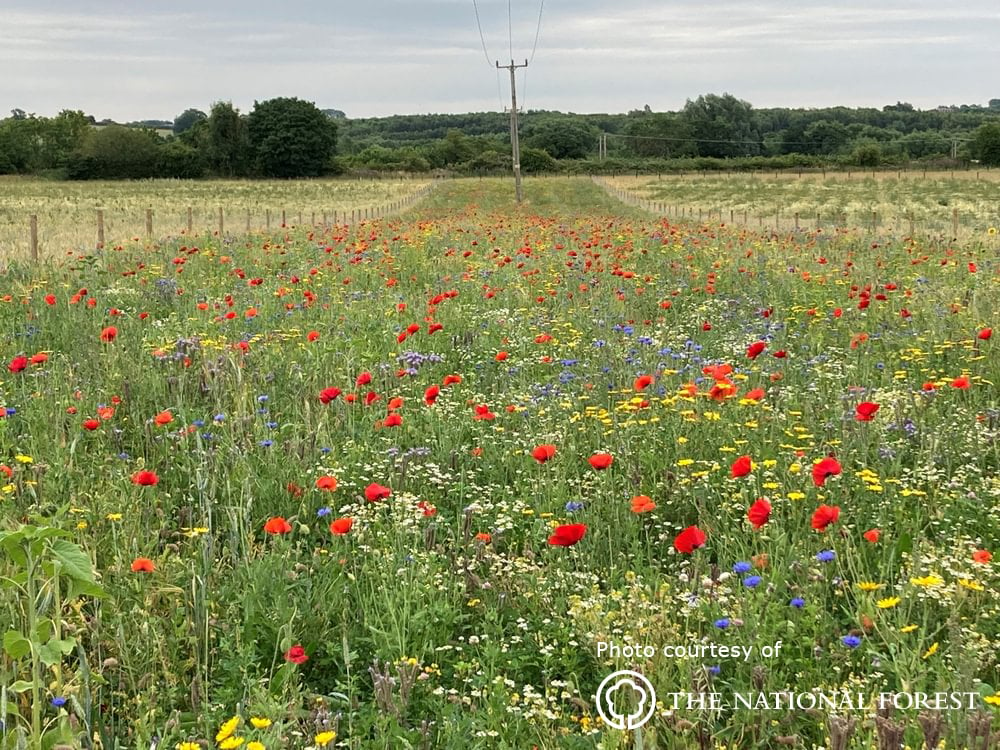
Different parts of the site have been designed for different purposes. Minorca East includes native broadleaved species such as field maple, alder, birch, aspen and rowan. Minorca North combines broadleaved trees and conifers selected for their ecological value. Elsewhere, ponds, wildflower-rich grasslands and open parkland add further variety.
This mix of habitats supports a wider range of species than woodland alone. Wildflowers provide food for pollinators, wetlands create opportunities for birds and aquatic wildlife, and developing woodland offers shelter and nesting sites as it matures.
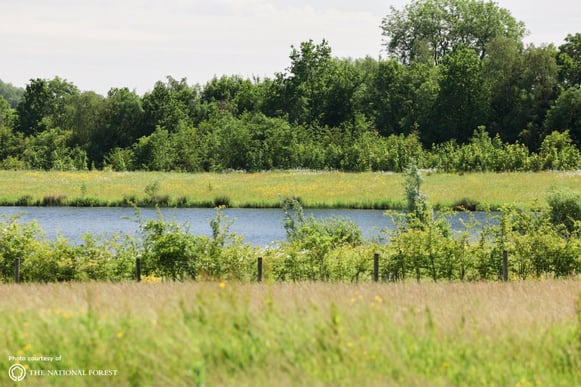
“Together, they provide a glimpse of a landscape in transition, where wildlife is beginning to make use of habitats that didn't exist a generation ago.”
Thirty years of change
Minorca forms part of a much larger story that has been unfolding across the National Forest for more than three decades.
When the National Forest was established in the early 1990s, forest covered just 6% of the area. Today, it stands at more than 26%, with more than 10 million trees planted across 200 square miles of Derbyshire, Leicestershire and Staffordshire.
Former coalfields, clay pits and fragmented land have gradually been transformed into a landscape that combines woodland with farmland, meadows, wetlands and existing woods. The result is a more connected environment that benefits both people and wildlife.
There are encouraging signs that wildlife is responding to this changing landscape. Woodland bird populations across the National Forest have increased by 48% over the past three decades, against a backdrop of widespread declines in woodland bird species nationally.
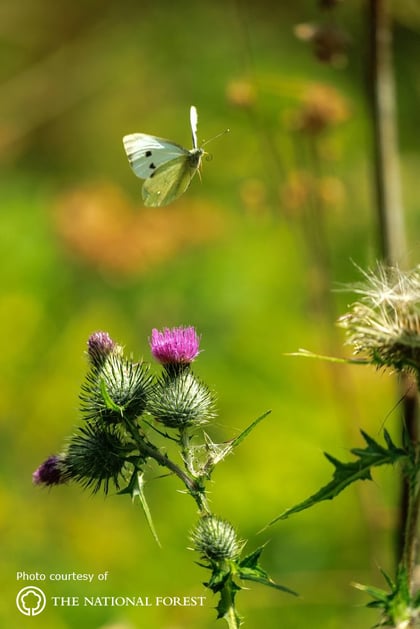
Butterflies are showing a similar pattern. In the decade to 2020, butterfly abundance in the National Forest increased at an average rate of 14.8% per year. Minorca Woods is proving particularly good for butterflies, with local enthusiasts recording exceptional populations of clouded yellow and brown argus there this year.
Habitat creation takes time, but these observations provide encouraging evidence of what can happen when new habitats are created and given time to develop.
Finding out what is working
Tree planting is often the most visible part of creating a forest but understanding what happens afterwards is equally important.
The bird surveys carried out at Minorca help researchers track how species use the site as habitats develop. Every bird recorded contributes to a growing body of evidence about how restoration is progressing and which habitats are proving most valuable.
The information collected does more than document change. It can help guide future management decisions, highlighting where habitats are performing well and where additional improvements may deliver further benefits for wildlife.
Research is taking place in other ways too. At Minorca East, the University of Nottingham has been running trials exploring the use of biochar in forests and its potential effects on soil carbon, nutrients, moisture and plant growth.
Together, this work is helping Minorca become a place where researchers and land managers can learn how different approaches contribute to long-term nature recovery.
“There's something striking about hearing birdsong in a place once dominated by coal extraction.”
Everyone has a part to play
Large-scale restoration depends on land, investment and long-term management, but there are many ways individuals can contribute.
Volunteering with conservation projects, creating wildlife-friendly spaces at home and supporting habitat restoration initiatives can all play a role. Landowners can explore opportunities for woodland creation and habitat management, with the National Forest team of foresters on hand to offer advice and support to help guide new projects.
People can also contribute directly through initiatives such as tree dedications, helping fund the creation and ongoing care of new woodland.
Sometimes, though, the most powerful way to connect with nature recovery is simply to experience it firsthand. Places like Minorca offer a chance to see how landscapes can change over time and how restoration can create new opportunities for wildlife.
“When the National Forest was established in the early 1990s, forest covered just 6% of the area. Today, it stands at more than 26%.”
Recovery takes time
There's something striking about hearing birdsong in a place once dominated by coal extraction.
Thirty years ago, Minorca was an opencast coal mine. Today, it is a growing mosaic of woodland, grassland and wetland habitats that support an increasing variety of wildlife.
The trees planted here will continue growing for decades to come. The habitats around them will evolve too, shaped by careful management, ongoing research and natural processes.
Minorca is only one part of the National Forest, but it reflects the wider transformation that has taken place across the region since the early 1990s. What was once a landscape associated with industry and extraction is increasingly becoming one where people and wildlife can thrive together.
For those listening at dawn, the evidence is already there in the chorus of birdsong.
Nature recovery rarely happens overnight. But the story of Minorca shows what can be achieved when it is given the one thing it needs most, a helping hand.
If you have been inspired to be that helping hand, then head over to nationalforest.org/ways-to-support
About the Reintegration Economy
For us, the key word is ‘connection’. This is why we created Nature Has No Borders, our new EU wide initiative focused on reconnecting habitats, removing barriers and supporting wildlife.
The loss and fragmentation of habitats, alongside the wider loss of biodiversity, are global challenges. Nature needs connected landscapes to thrive and continue supporting life across our shared planet.
Through purchases of Almo Nature, Fondazione Capellino supports projects around the world that remove barriers, reconnect habitats, protect nature and restore biodiversity.
We call this approach the Reintegration Economy.
By choosing to be part of it, you are helping this work continue.
