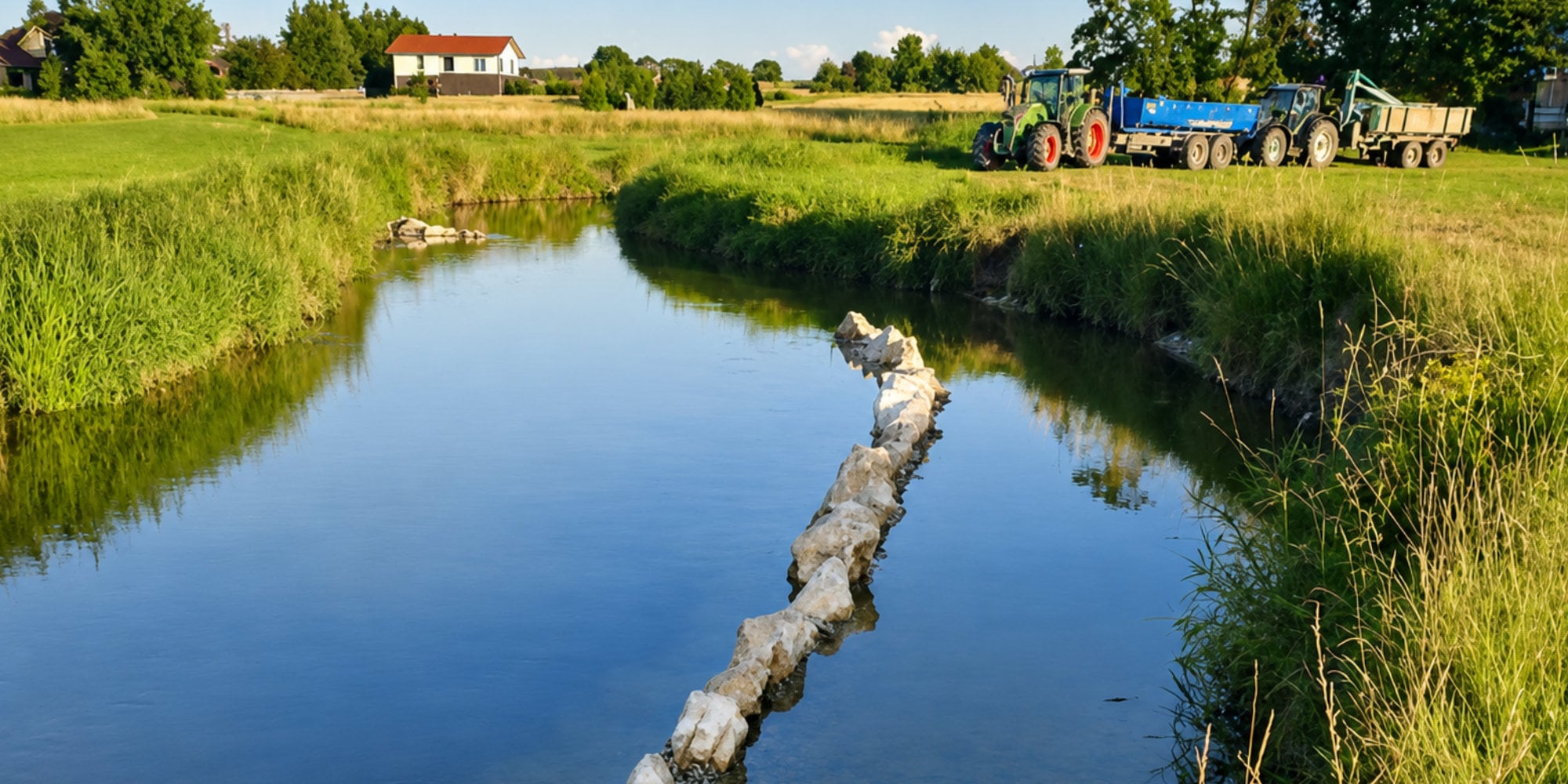


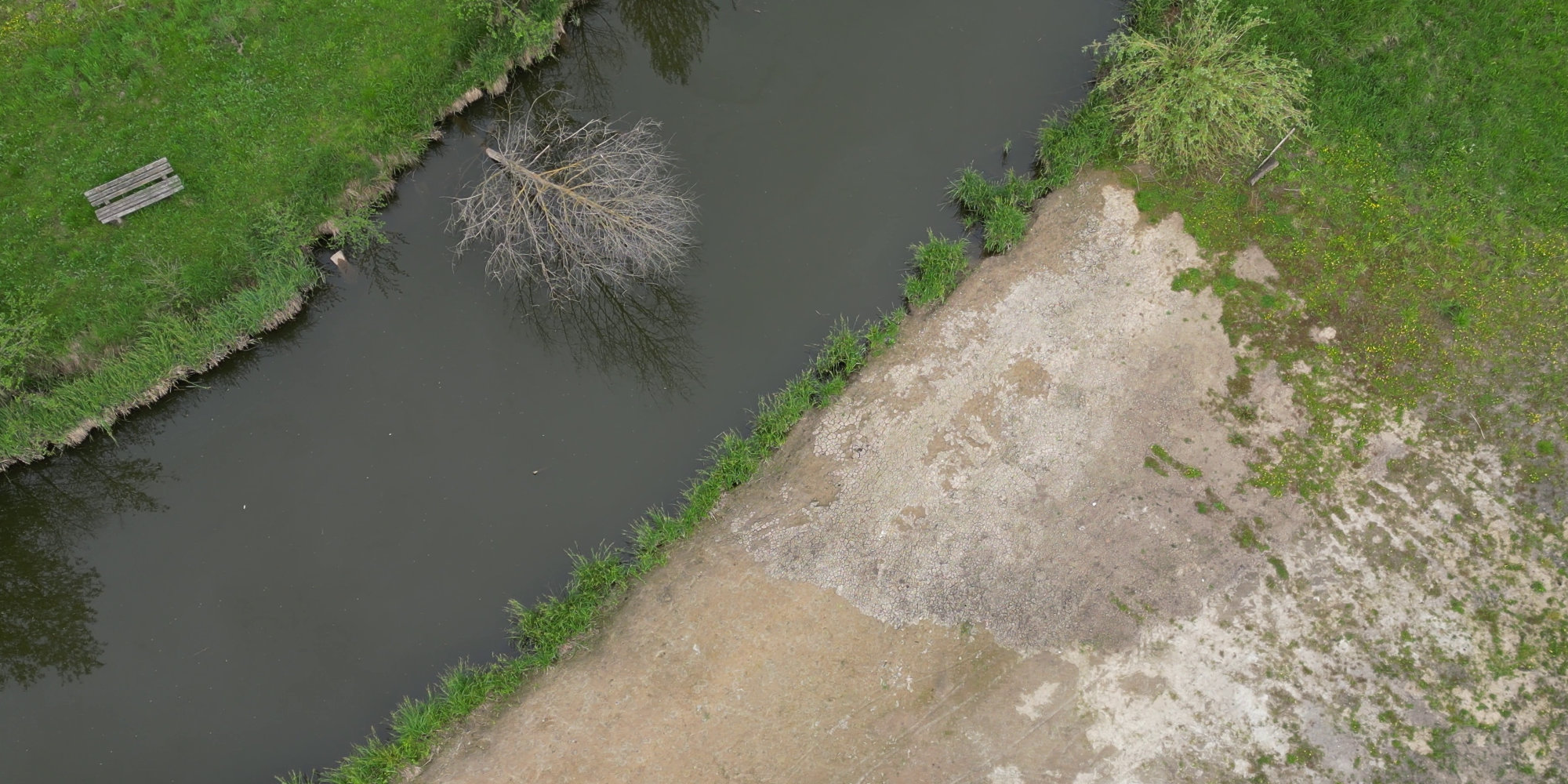
In the Bavarian countryside, a tributary of the Danube has lost half of its water and almost all its wildlife. This is not a minor environmental issue. It reflects the same process seen in depleted ecosystems around the world, where the loss of natural balance supports the growth of viral reservoirs and raises the risk of spillover into humans.
The restoration of the Große Laber area, funded almost entirely by the Fondazione Capellino and carried out with local nature conservation groups and volunteers, is part of an effort to restore ecological balance. Human health security depends on this balance more than many realise.
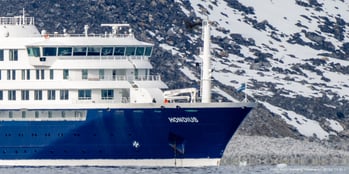 On 2nd May 2026, the World Health Organization received a notification from the United Kingdom. A cluster of severe respiratory failure cases had been reported on a cruise ship in the Atlantic. The virus was the Andes virus, a variant of Hantavirus circulating among rodents in Argentine and Chilean Patagonia. The mortality rate is estimated to be 38%.
How did this happen? It's suspected that patient zero, a man who, during a trip to Argentina, appears to have visited a rubbish tip on the outskirts of Ushuaia to observe scavenging birds of prey, was likely infected through contact with wild rodents inhabiting those areas. He carried the virus onto the ship and, from there, the infection spread amongst passengers sharing who were all in close proximity.
The wild had come on board.
This story, however, may begin much earlier, in ecosystems where biodiversity has been reduced and natural balances have weakened. In these environments, some species that can carry viruses, such as rodents, may become more widespread as predators and other wildlife decline. It's within this link between biodiversity loss and global health that Fondazione Capellino, the sole owner of Almo Nature, has chosen to focus its work. Since 2023, it has supported ecological restoration projects, including initiatives along the banks of a tributary of the Danube in Bavaria.
Protecting biodiversity is not an act of kindness towards nature. It is one of the strongest protection systems we have against viruses that are still unknown to us.
Hantavirus isn't new, just as Coronavirus wasn't new. It has circulated among wild rodents for millions of years. What's changed is how often, and how easily it is now able to reach people.
In rich and biologically complex ecosystems, what epidemiologists call the dilution effect plays a role. Viruses move across many species, and the jump to humans becomes less likely because most animals slow or interrupt transmission. But when natural habitats are turned into farmland or pasture, or when wetlands dry out, this complexity collapses. What remains are a few generalist species that cope well with human activity, such as rodents, and the pathway from animal reservoirs to humans becomes much shorter.
A study published in Nature in 2020 measured this pattern across thousands of ecosystems worldwide. It found that in areas most altered by agriculture, the proportion of species capable of carrying pathogens is up to 72% higher than in intact natural areas.
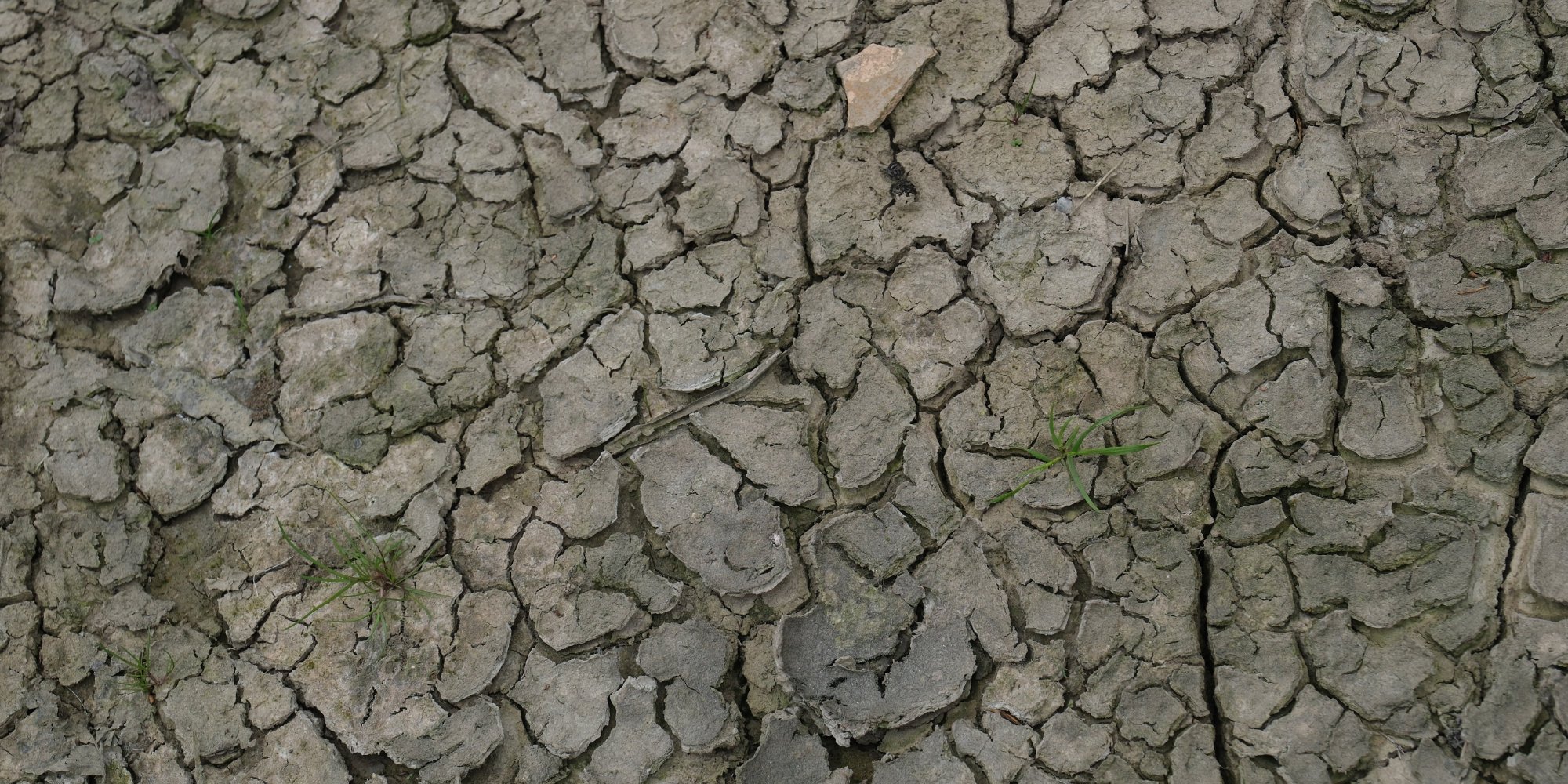
The Große Laber is a river many people have never heard of. It flows for 120 kilometres through the Bavarian countryside, between maize fields and managed pastures, before joining the Danube. It is not visually striking. Yet what is happening along its banks reflects a quiet loss seen across the world wherever intensive farming replaces nature. Water levels have fallen by over 50%. Peat bogs have shrunk. Sensitive species such as the lapwing, the snipe, the white stork, and the Dalmatian frog are disappearing one by one. What is left is a community of wildlife that is less diverse and less able to act as a buffer between nature and people.
There are three protected natural areas in the valley, known as Fauna Flora Habitat areas. These reserves are separated by farmland that behaves like islands within a large agricultural landscape. Animals move less between them, populations mix less, and the ecological network becomes weaker over time.
Ecological continuity, supported by biodiversity corridors, is now central to conservation work. The aim is to allow animals to move more freely, to support healthy mixing of populations, and to rebuild ecological complexity.
Every species lost from a Bavarian river shortens the path a virus must travel to reach people.
This is the approach taken by the Capellino Foundation through the Danube Biodiversity Corridor project in the Große Laber valley, in partnership with the Deutscher Verband für Landschaftspflege (DVL).
The project, originally covering 40 kilometres of river and recently extended to 90 kilometres, includes restoring waterways, managing riverbanks to support bird habitats, and working with local farmers. Those who reduce synthetic fertilisers and adjust farming schedules to support wildlife gain a market benefit through the Labertal Ox Initiative, a label that links extensive grazing with biodiversity protection.
An analysis published in Lancet Planetary Health identified four main drivers behind the emergence of new viruses that spread from animals to humans. These are habitat destruction, intensive livestock farming, wildlife trade, and climate change. None of these drivers is limited to one region. They appear in many parts of the world, from the forests of the Congo Basin, to the grasslands of Patagonia. They can also emerge in places like Bavaria.
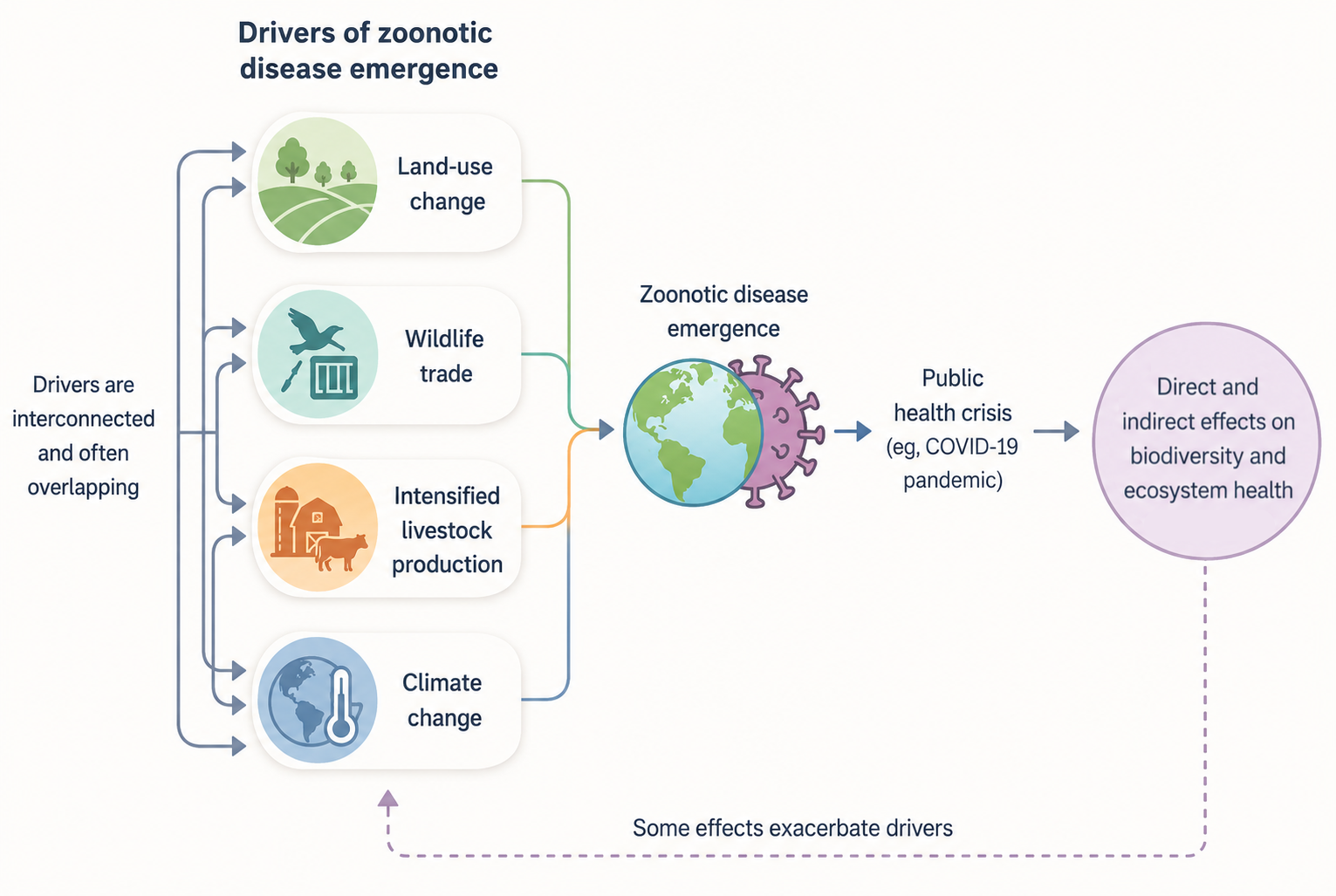
COVID-19, which was responsible for millions of deaths worldwide and an estimated global economic impact of at least 13.8 trillion US Dollars according to the International Monetary Fund, highlighted the possible consequences of ignoring pressures placed on natural systems. Researchers suggest that environmental disruption and closer contact between humans and wildlife increase the risk of diseases spreading more widely. The Hantavirus outbreak on a cruise ship brings these concerns back into focus in real time.
The initiative in Bavaria will not solve the global problem on its own. Reversing biodiversity loss requires major economic and policy change across continents. Even so, it shows that individual and private action can help shift the direction. The Reintegration Economy is based on this idea, where value is returned to ecosystems instead of being taken from them. It aims to slow a process that can begin in a damaged ecosystem in Patagonia and eventually reach hospital wards far away, including in Switzerland.




-3.png)