


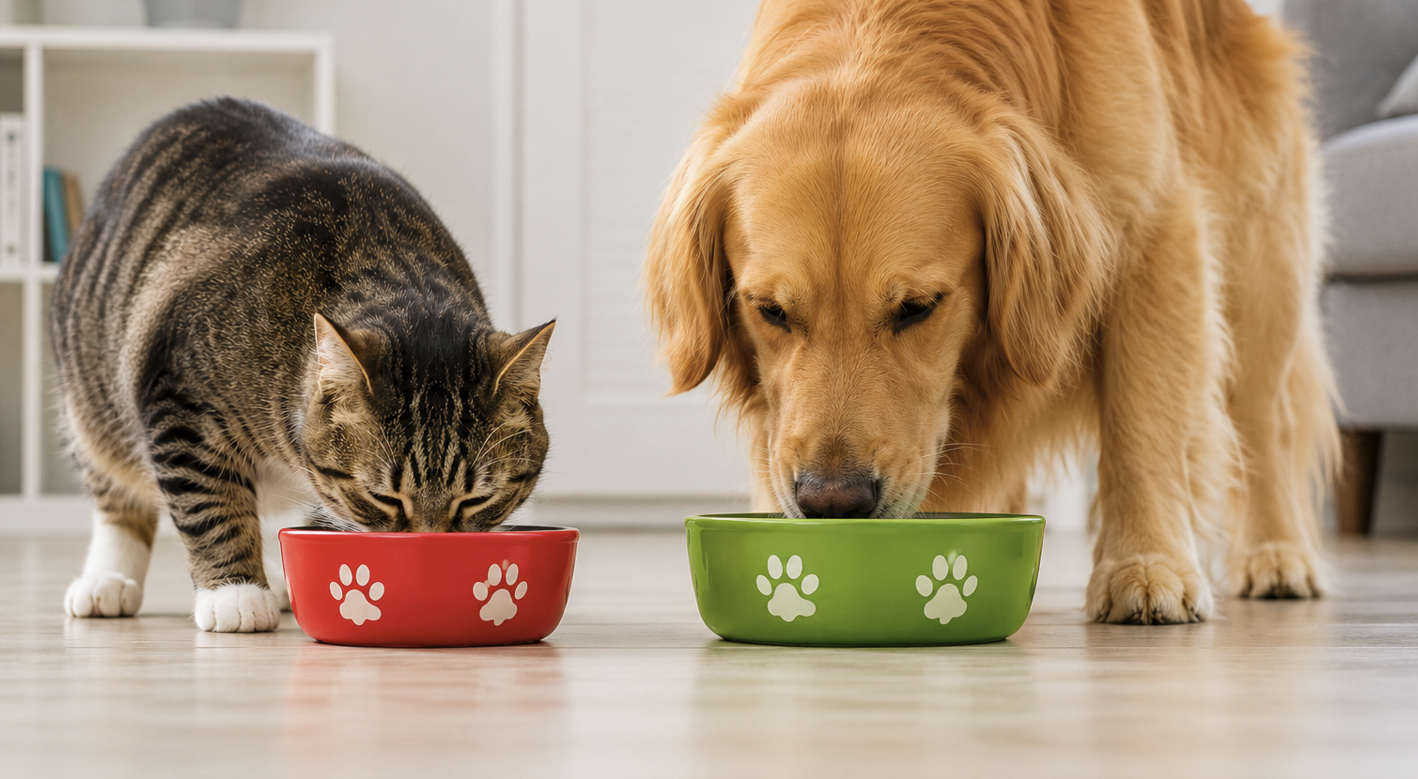
If you've ever felt guilty pouring the same food into your pet's bowl day after day, you're not alone.
After all, most of us enjoy a little variety in our own diets. So it's natural to wonder whether our dogs and cats might feel the same way.
The answer is not quite as simple as yes or no.
While there is limited scientific evidence that pets experience food boredom in the same way humans do, many dogs and cats do show preferences for certain foods. Sometimes, what looks like boredom may simply be a preference for a different aroma, texture, or feeding experience.
Mealtime Is About More Than Flavor
When humans think about food, we often focus on taste. For pets, the experience is a little different.
Dogs rely heavily on their sense of smell when evaluating food, and cats also use aroma as an important part of how they experience a meal. Texture can play a role too. A smooth mousse, a pâté, a shredded recipe, or a meal served in broth can all feel different to a pet.
This may help explain why a dog or cat seems more enthusiastic about one meal than another, even when both are nutritionally appropriate options.
Every Pet Is Different
Just like people, pets are individuals. Not every dog or cat approaches food in the same way.
Some pets are happy eating the same recipe every day, while others show more interest when offered different protein sources, textures, or formats. Paying attention to your pet's individual preferences can help make mealtime a more enjoyable experience while ensuring their nutritional needs continue to be met.
This is one reason why many pet parents choose to incorporate variety into their pet's feeding routine.
Bringing Variety to the Bowl
Variety doesn't have to mean constantly changing your pet's diet.
Sometimes, it can be as simple as offering different textures, recipes, or moisture levels while maintaining a feeding routine that meets your pet's nutritional needs.
Rotational feeding—alternating between different protein sources over time— is a feeding approach that many veterinary professionals support.
Introducing a variety of proteins from an early age may help support a diverse gut microbiome, which plays an important role in digestion, immune function, and overall health.
Some research also suggests that regularly exposing pets to different protein sources may help reduce the likelihood of developing sensitivities associated with prolonged exposure to a single ingredient.
For cats, this might mean alternating between complete meals such as HQS Complete, La Cucina HQS, or Supportive Formulas HQS, while rotating between different recipes and protein sources, such as chicken, tuna, sole, salmon, mackerel, or beef. Variety can also come from complementary meals like Mousse HQS (smooth texture), Natural HQS (shredded pieces), or Hydration Help HQS (goat milk or fillets in broth).
For dogs, HQS Complete Dog provides complete and balanced daily nutrition, while different recipes within the range offer an opportunity to introduce variety for pets that enjoy it. You can also introduce complementary options from the Natural HQS Dog line to offer even more variety.
So, Do Pets Really Get Bored?
We can't say for certain that cats and dogs experience boredom with food in the same way people do.
What we do know is that many pets respond to differences in aroma, texture, and recipe variety. Rotational feeding may also offer additional benefits by promoting greater dietary diversity and supporting a healthy gut microbiome, making it an option worth considering for pet parents.
That's why Almo Nature offers a wide variety of recipes and protein options, textures, and formats, allowing pet parents to tailor mealtime to their companion's individual preferences while maintaining a nutritionally appropriate diet.
And when you choose Almo Nature, you're supporting more than your pet's well-being. Through the work of the Fondazione Capellino, every purchase helps fund projects dedicated to protecting biodiversity and the ecosystems that all animals depend on.