

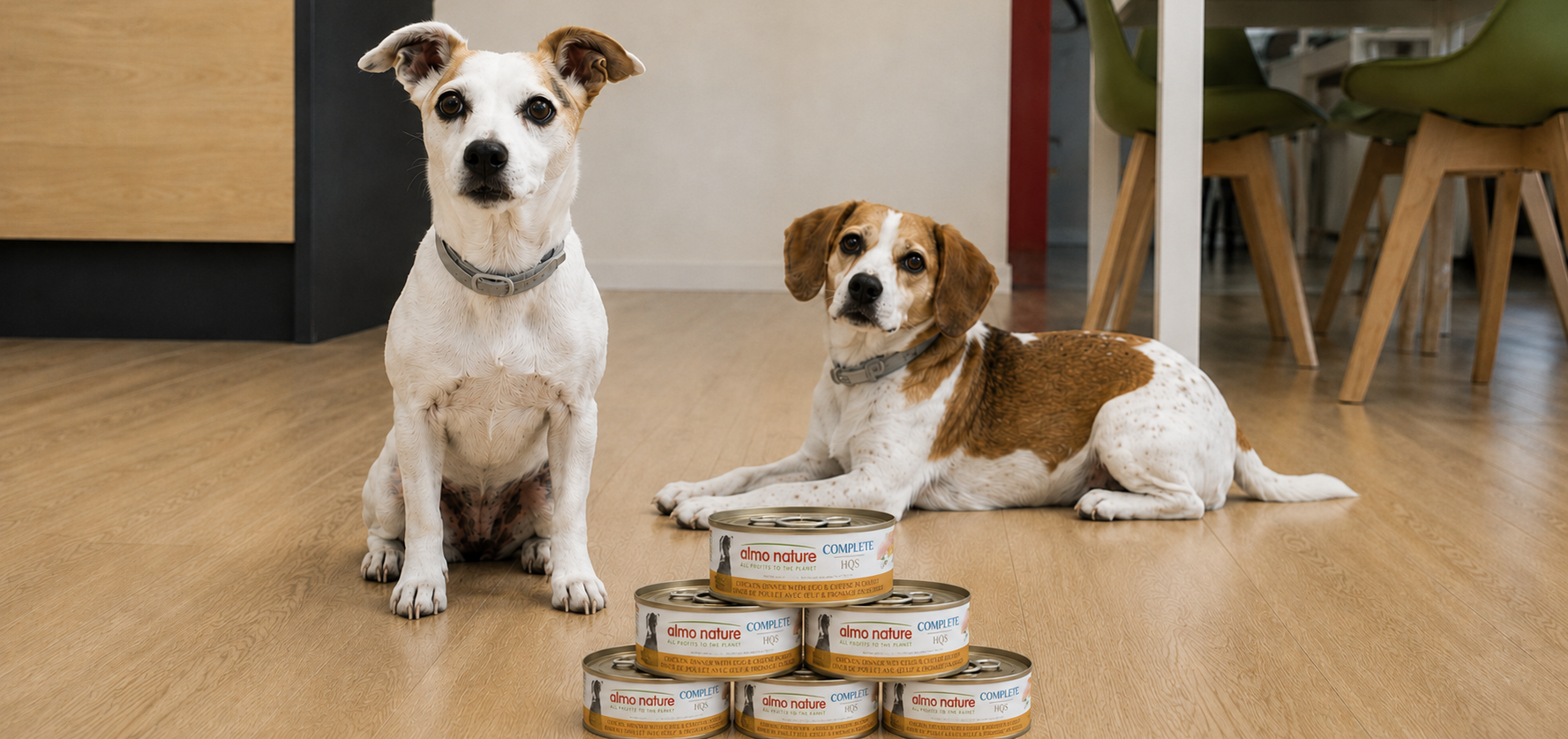
Have you ever noticed how quickly your dog reacts when you open a can of wet food?
That's because dogs experience food very differently than we do. Guided largely by their sense of smell, they are naturally drawn to meals that offer rich aromas, appealing textures, and plenty of flavour.
But wet food offers more than just an enjoyable eating experience. From increased moisture to greater variety, it can provide several benefits that support your dog's overall well-being.
A meal that appeals to the senses
Many dogs are reluctant to eat dry food on its own. Dogs experience the world through their sense of smell in ways we can hardly imagine. The smell of real meat is not just an added detail. To a dog, it is one of the clearest signs that what is in front of them is food.
Wet food can be especially helpful for older dogs. As their sense of smell becomes less sharp and dry kibble becomes less appealing, the aroma of wet food can encourage them to eat with greater enjoyment.
Making it easier to vary protein sources
Different proteins provide different micronutrients, helping to create a more varied and balanced nutritional profile than a single protein source can offer every day. Wet food makes it much easier to alternate between red meat, white meat and fish, giving dogs a wider variety of nutrients and flavours.
Extra support on warm days
As the weather becomes warmer, adding extra moisture to your dog's meals can be beneficial. Dry food contains around 8% moisture, while wet food can contain up to 80%. Including wet food in your dog's meals during the summer months is a simple way to help support their fluid intake.
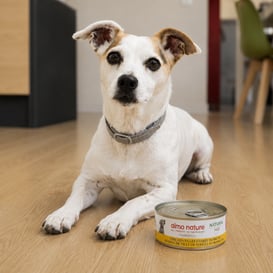
Almo Nature's HQS wet dog food is made with meat or fish originally intended for human consumption. It contains only high quality ingredients, gently steamed to help preserve their nutritional value. Many recipes contain a single protein source, making them ideal for dogs with food sensitivities.
The main ranges
- Complete HQS, a complete and balanced food that provides all the nutrients an adult dog needs.
- Natural HQS, complementary food designed to be fed as part of a rotational feeding approach alongside Complete HQS recipes
Adding wet food to your dog's daily diet is a small change, but it can make a real difference. It is a simple way to show care for a loyal companion whose daily life is guided by routine and, above all, by their senses, especially that of smell.
Why does it work?
To understand why wet food can be so appealing, it helps to look back at the dog's history.
Around ten thousand years ago, dogs made one of the most remarkable adaptations in mammalian evolution: they chose to live alongside humans. Over time, they learnt to digest starches and adapt to a wide range of foods.
Yet their teeth and digestive system have remained those of a carnivore. Dogs are opportunistic carnivores. When presented with a bowl of kibble, most will eat it. They adapt, just as they always have.
Kibble, however, was created to solve a challenge for humans rather than for dogs. It stores well, is easy to measure, and requires no preparation. It is a practical solution for busy households.
Over time, many people came to see kibble as the ideal food for dogs. Yet not every dog eats it enthusiastically. Some refuse it, some leave it untouched for hours, and others eat only when they become truly hungry. This is not surprising. Dogs can tell the difference between the smell of real meat and the smell of dry food.
The fact that many dogs accept kibble doesn't mean it's their preferred choice. It simply reflects their remarkable ability to adapt to life with us.
So, is it worth introducing wet food to your dog's diet?
We certainly think so.